







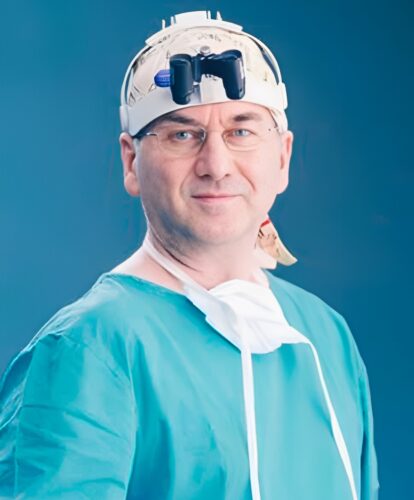
Ao.Univ.Prof.i.R.Univ.Doz.Dr. Kurosh Paya
Circumcision:
The foreskin consists of two leaves, an inner and an outer leaf. Initially, the inner leaf is almost always glued to the glans, or grown together. Therefore pulling it back in the newborn age is hardly possible and better not to try. This foreskin can easily be injured, e.g. if it is pulled back too forcefully, and then scarring occurs. This, but even a congenital tightness, can make retraction of the foreskin painful or impossible. Even in infants, an excessively narrow opening of the foreskin can lead to backwater when urinating (so-called "ballooning"), infections and especially urinary tract infections can occur. Smegma, a fatty secretion from glands, which often shines through as yellowish-white globules under the foreskin in small children, collects under the foreskin when hygiene is poor. Up to the age of 3, the foreskin detaches itself from the glans in most of the boys so that at least the tip becomes free and up to the age of 10, most of the boys have no more problems with the complete retraction of the foreskin behind the glans.
There are few reliable statements about the physiological functions of the foreskin, a protection of the glans is postulated, as well as erogenous stimulation functions of the inner leaf, a circumcision, however, does not only not seem to be a disadvantage, but perhaps even an advantage. The acceptance of circumcision is given and readable by very large serious and scientifically arguing professional societies: The benefits of circumcision outweigh the harms, the American Academy of Pediatrics says in a policy statement in Pediatrics. The benefits include lower risk for urinary tract infections before 1 year of age, as well as reduced risk for sexually transmitted infections and penile cancer later in life. However, the AAP stops short of recommending routine circumcision. The decision is best left to parents, the group says.
Of all these over 300 techniques, very few have been transferred and preserved in modern times and modern medicine.
The following three techniques are known worldwide today:
Most common circumcision technique in the West. In babies under local anesthesia, the foreskin is put under pressure between two metal rings so that the blood vessels are closed and the foreskin can be cut off sharply. Disadvantages here being a significantly increased risk of secondary bleeding and the inaccurate prediction of the residual length of the foreskin.
Thus, it may sometimes be necessary to carry out a follow-up resection. The risk of wound dehiscence, i.e. the spreading of the wound edges with less attractive results in the long term, is also higher than with surgical resection. It can be performed anywhere, even at home, but, just like surgical techniques, it requires high standards of hygiene, as otherwise dangerous diseases (HIV, etc.) could be transmitted. Significantly cheaper in cost comparison.
Immediately after birth, a special clamping ring is fitted, which falls off by itself with the foreskin after a few days.
Frequently used in the USA, recently less and less frequently because of the higher complication rates and sometimes less pleasant results. Cheaper in terms of expenses than terminal resection. The main advantage here being the fast procedure under local anesthesia, the postoperative course, which is unproblematic in most cases, and a usually quite acceptable final image at low cost.
The main disadvantages are that after the ring has fallen off, the remaining edge must often be carefully folded back daily for several weeks in order to prevent scarring from causing the glans to "overgrow" again. There is also the risk that the ring does not always come off completely and then has to be partially cut off or that wound dehiscence occurs or that there is a very long preliminary test or that too much of the penis skin is resected. Also, the post-bleeding rate is higher compared to surgical circumcision.
Brigittaplatz 23, 1200 Wien Telefon: 01 / 9928805 office@beschneidungsklinik.at
Opening hours:
(The time of appointment is agreed only
by phone or e-mail)
| Friday | 16:00 - 19:00 |
|---|---|
| Saturday | 10:00 - 14:00 |
| Sunday | 10:00 - 14:00 |
1
Circumcision
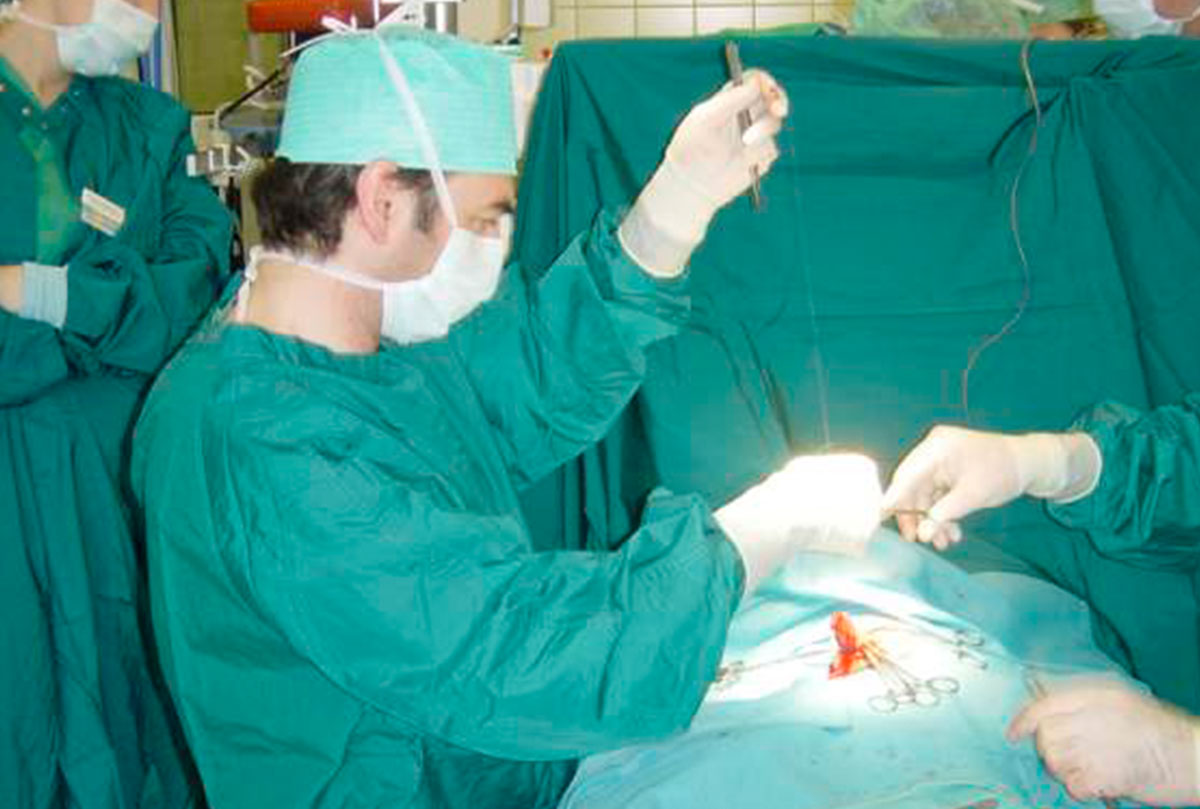
I have been working in surgery and pediatric surgery since 1988, I have worked very successfully in many hospitals in Austria as well as many years abroad (mainly in the Arab and Asian region) and have extremely extended my experience with circumcisions, among other things I have designed outpatient circumcision clinics for the state hospital owner, so I can call myself a specialist. Also, I have taught the technique of circumcision to many surgeons in my teaching capacity at the Medical University of Vienna and at foreign universities.
In my private practice, circumcision of children and adults is one of the most frequently performed operations, and (adults and children of members of embassies and governments) as well as other publicly known persons from Austria and all over the world, including numerous adult patients, count among my satisfied patients.
In my work, the safety and freedom from pain for your son (the patient) but also a concise and socially balanced cost calculation for self-paying patients is the focus of this activity.
Univ.Prof.Dr.K.Paya
2
What is a circumcision?
is the surgical removal of all or part of the foreskin of the penis. It is therefore an operation on a boy or man "male circumcision".
In principle, in childhood/adolescence it is first and foremost a decision of the parents over the child/adolescent whether circumcision should be done or not. This raises ethical and legal questions that have been intensively discussed in recent years.
This should be mentioned as an introduction, because important questions such as "should I have my son circumcised?", "when?", "why?" "is that allowed?" are directly related to it.

3
CIRCUMCISION
The male circumcision is not a beginner operation and should not be performed by a quack. The result is in most cases not correctable and therefore the operation should always be put in the hands of a professional.
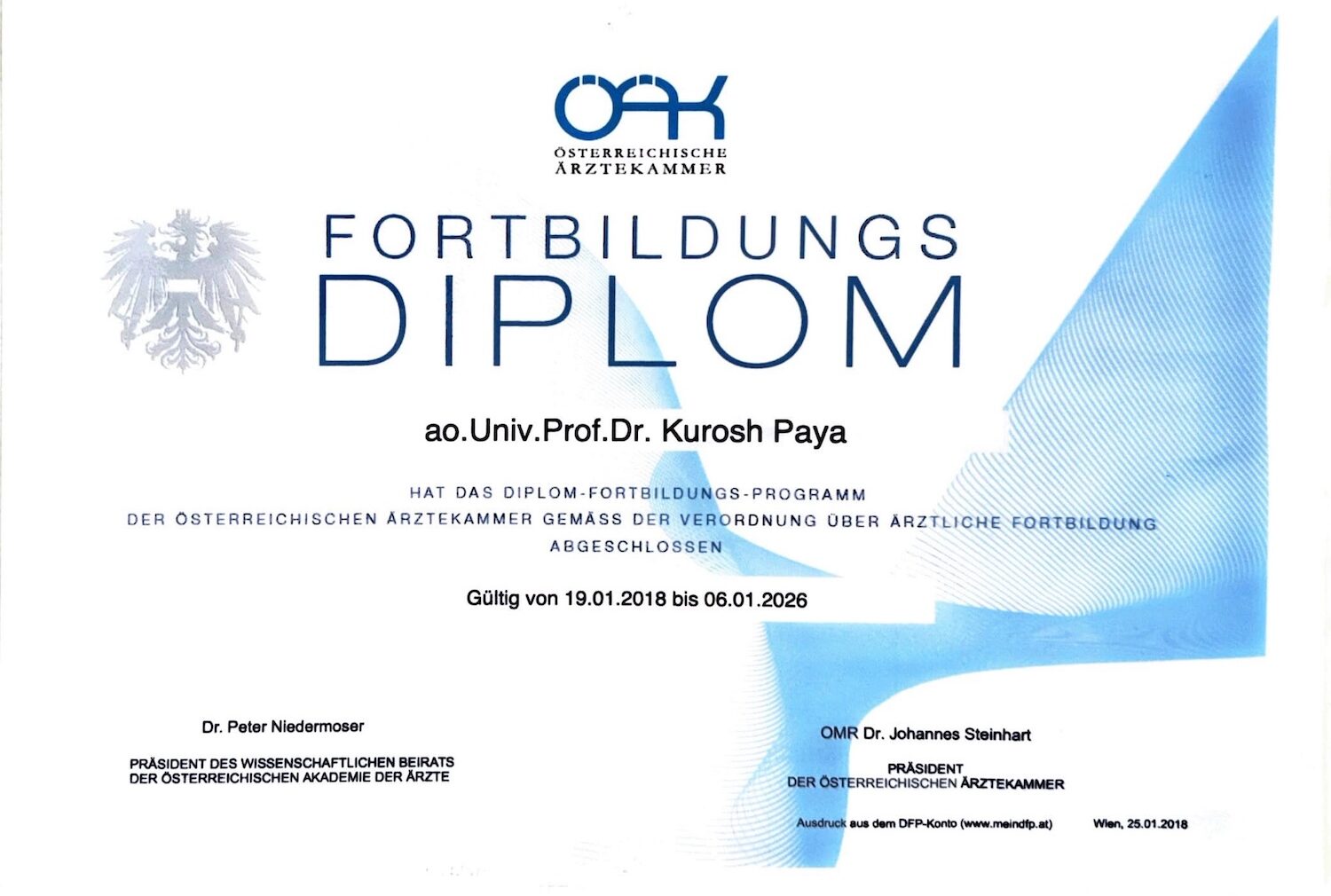
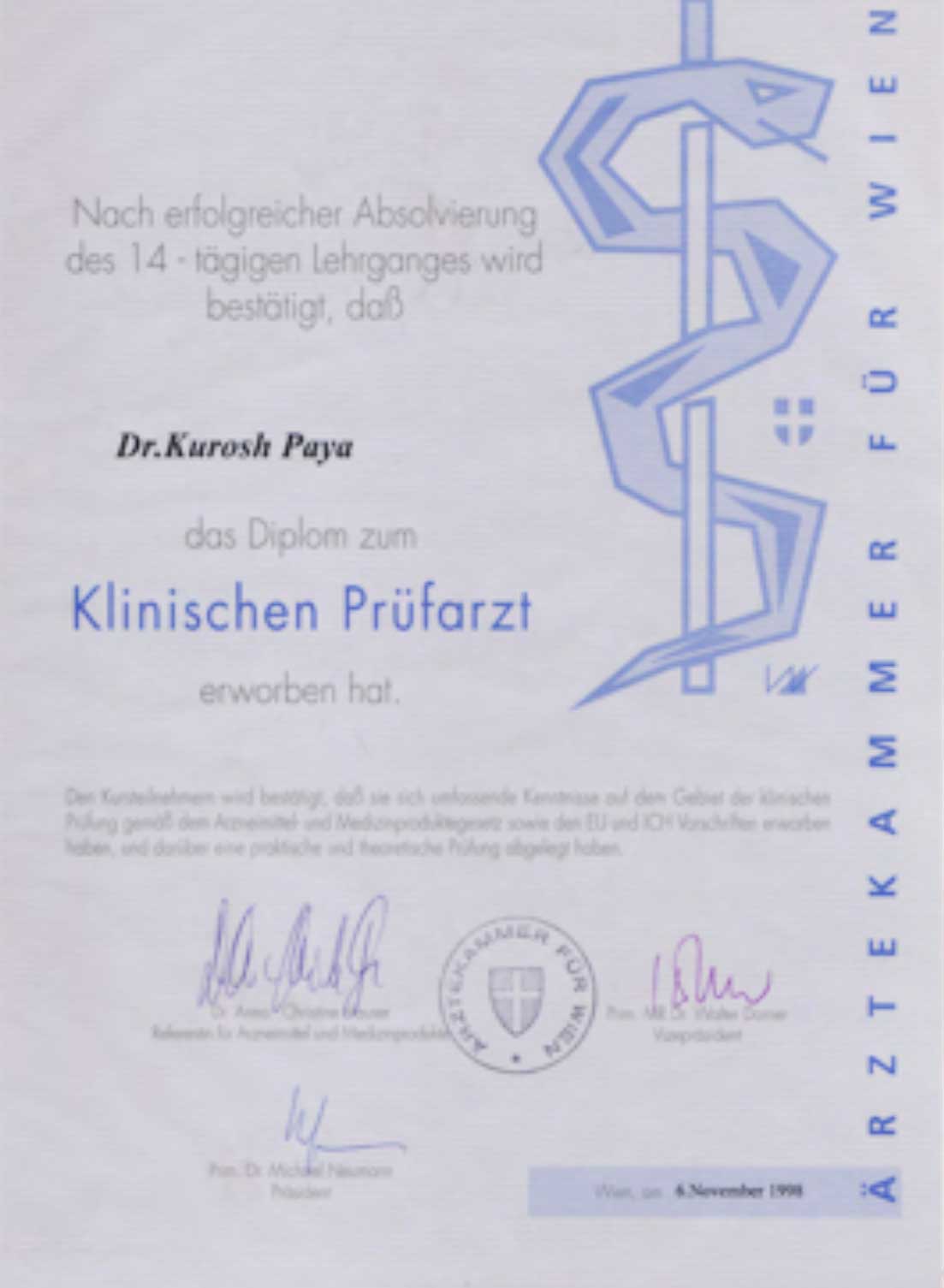
Prof.Paya is a specialist in Austria and is known far beyond the borders for religious, hygienic or medically indicated circumcision of the foreskin in boys and men.
We offer quick appointments, painless, sterile, state-of-the-art technology, with or without anesthesia. Appointments now also directly selectable under
"Make appointment" .
Male circumcision

Circumcision
For medical, religious, or hygienic reasons - with or without sedation (anesthesia) - but always pain-free! Vienna's top address for CIRCUMCISIONS!
When should circumcision be done?
This decision "when" is usually made on the basis of religion, culture, or the personal and family attitude towards circumcision. Americans usually want circumcision immediately after birth, members of the Jewish religious community usually on the 8th day of life, members of the Islamic religious community sometimes immediately after birth, but often only later in the first 10 years of life. If circumcision is performed in the first 48-72 hours, the little man feels no pain with relatively few measures, the earlier the easier (so mostly no anesthesia, only local anesthesia necessary and still no pain, probably no memory, probably no negative experiences).
The recommendation of many pediatricians in Austria is not to circumcise before the 3rd day of life. In the initial hours of life, the coagulating ability of the child's blood is a problem so that must be taken into account. In the 2nd to 3rd year of life, the physical difference is first recognized in the anal phase and then (4th to 6th year of life, phallic phase) the child slowly identifies with the father. After the age of 5-6 years, there is the problem of school enrollment and the already occurred "awareness" of the penis as a body part with a certain value, so changes are also clearly perceived.
From adolescence (the actual decision-making age when one wants to proceed strictly ethically, i.e. not to perform a medically not indicated, supposedly "unnecessary" intervention without the consent of the person concerned), circumcisions are perceived as very unpleasant, even if they are generally performed under anesthesia and require some time of adjustment after the operation and the frequency of complications also increases to a large extent. Wound healing takes much longer, the "time of suffering" is much longer, also the person is already accustomed to the foreskin and an adjustment can cause problems. During puberty, the adolescent is somehow particularly attentive to his or her sexual organ anyway, and such drastic changes can be perceived as extremely unpleasant and have a negative influence on the normal development of sexuality. So there is a conflict between ethical and legal as well as medical arguments. When deciding "when", therefore, the ethical and legal arguments as well as the normally expected living conditions should be taken into account. If, for example, the family belongs to the Islamic or Jewish religious community, in reality it is to be expected that the children will be brought up in this way.
They would then very early in the group of their peers have an outsider role as an uncircumcised exception, and even in the family - if as to assume the father is circumcised - whether that would trigger identification disorders is something only a psychologist can answer, but it would be conceivable. In these cases, it can be assumed with great probability that this child will remain in the Islamic or Jewish tradition and religious community and would later also decide in favour of circumcision, only with the subsequent substantially different negative medical conditions. Incidentally, this question was also addressed in a publication and published in a very high-calibre scientific journal. The authors of this publication conclude that the best time for circumcision is the first week of life. {Optimal time for neonatal circumcision: An observation - based study. J Pediatr Urol 2009}
In our opinion, therefore, religious circumcision should be performed as soon as possible after birth or as soon as permitted by the pediatrician.
Contact form
If you have any questions about our services and offers, please use the form below!
We will get back to you as soon as possible.
SOME OF OUR OTHER SERVICES
Further information about our other services can be found on our main website at
Ordination Clinic Vienna
The Clinic Vienna, headed by Dr. Paya, offers a wide range of holistic therapies.

CHILDREN
Surgery for children, adolescents, newborns and premature infants.
OUTPATIENT SURGERY FOR CHILDREN AND ADULTS IN OUR OWN MODERNLY EQUIPPED OP

PEDIATRIC AND ADOLESCENT SURGERY
Ingrown toenails, warts, lipomas, moles, etc. sometimes require surgical intervention. We take even minor surgeries seriously.

SERVICES
Circumcisions, Laparoscopic appendectomy, Hernias in children, Abdominal pain in children, Gastroscopy & Colonoscopy, Lymphangioma treatment, Hemangioma treatment, Neonatal surgery, Lipoma treatment, Cryotherapy in small lesions of the skin, warts and tumors and so on..
Reviews
Are you satisfied with us?
Then please feel free to rate us on
www.google.de
или
"DocFinder"
Your opinion is important to us!