






Pediatric and Adolescent Surgery General Surgery General Practice / Family Medicine

Ao.Univ.Prof.i.R.Univ.Doz.Dr.
Kurosh Paya
Medizinisches Curriculum
(1988 - 2021)
- Promotion zum Dr. med. (Universität Wien)
- Arzt für Allgemeinmedizin
- Facharzt für Chirurgie
- Facharzt für Kinderchirurgie
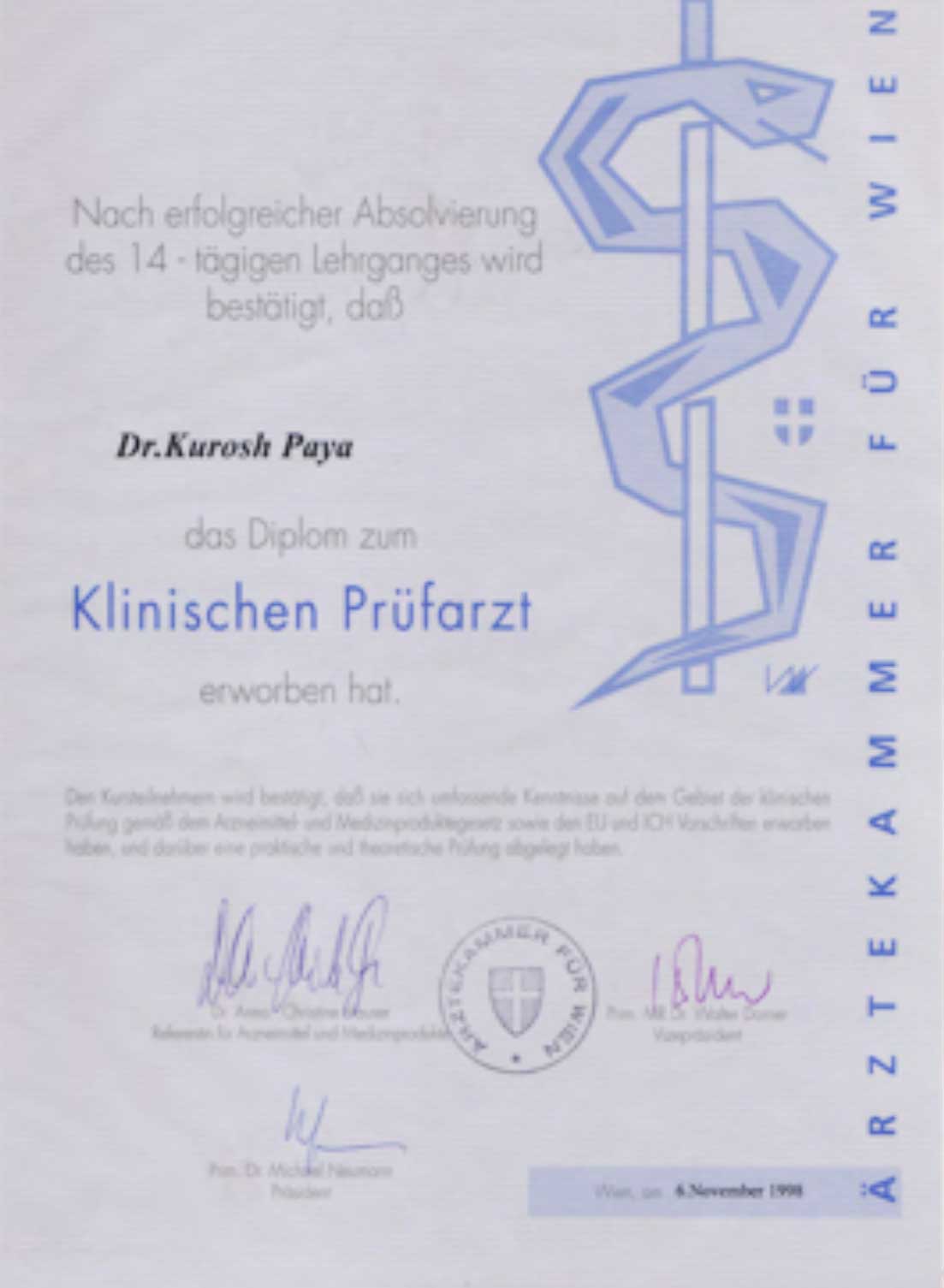
- Klinischer Prüfarzt
- Allgemein beeideter und gerichtlich zertifizierter Sachverständiger
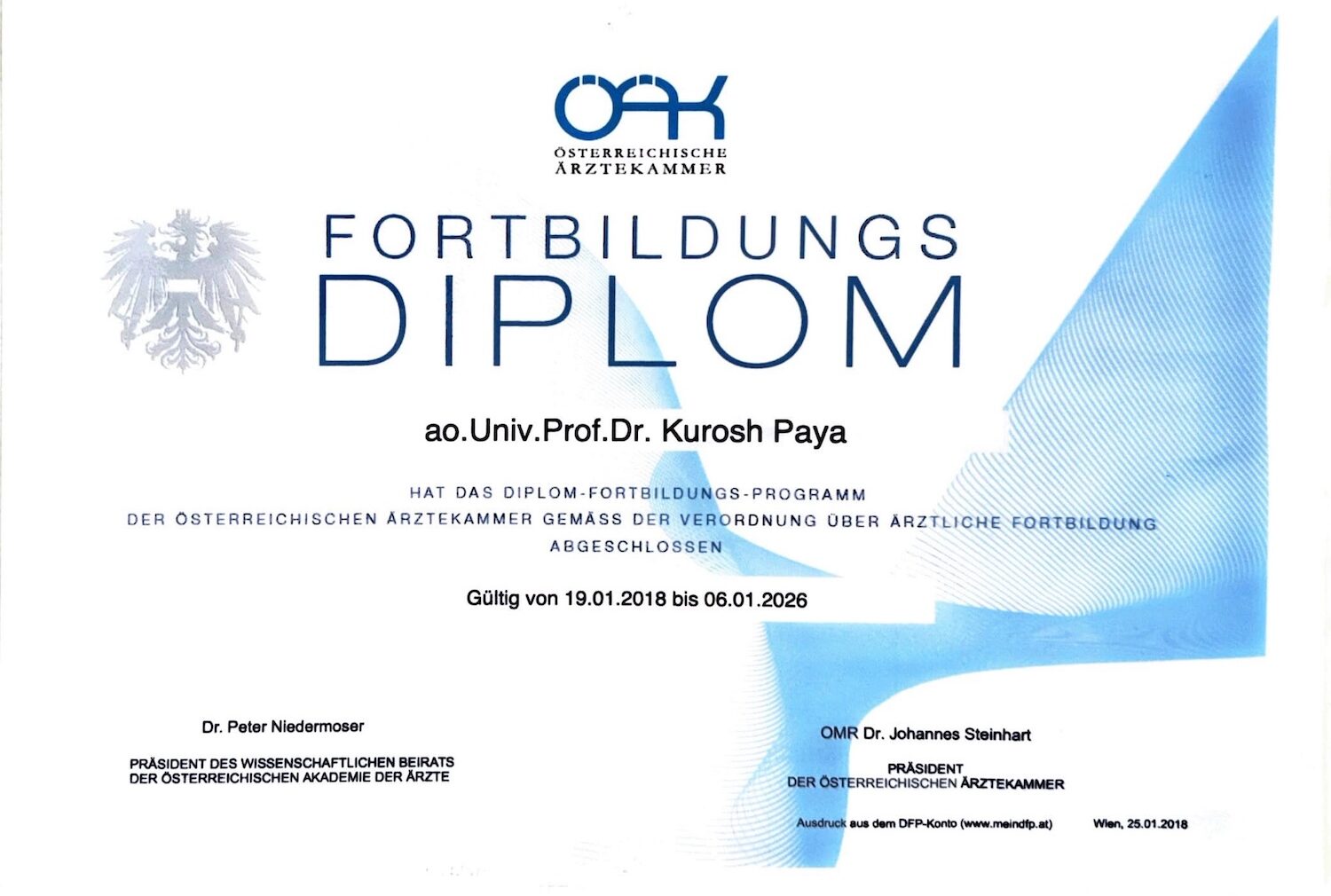
- Diplom postgradualer Lehrgang für medizinische Führungskräfte der Universität Wien
- Universitätsdozent für Kinderchirurgie MUW
- Außerordentlicher Universitätsprofessor MUW
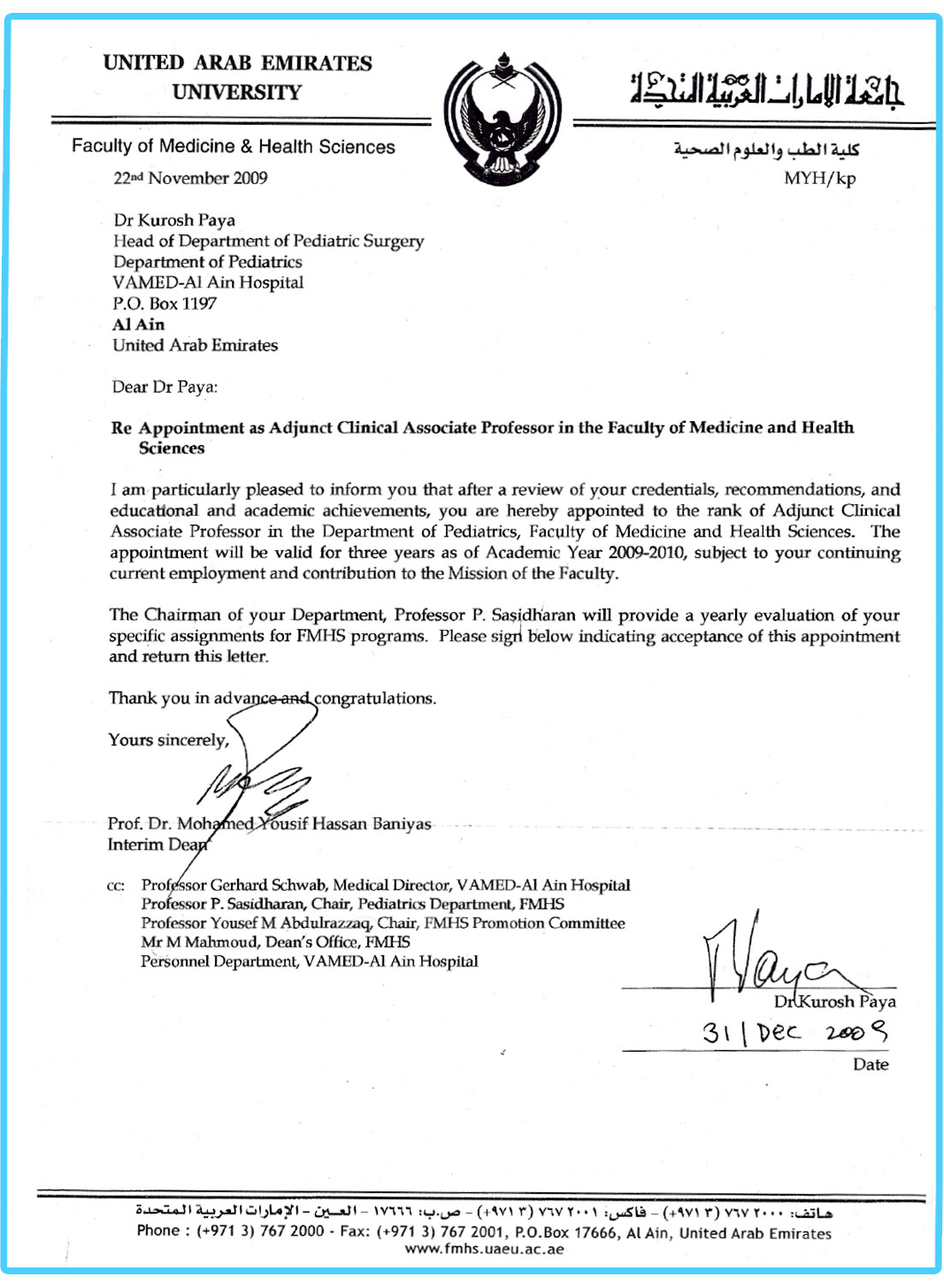
- Adjunct Clinical Associate Professor Faculty of Medical and Health Sciences UAE University
- Ruhestand MUW-AKH Wien
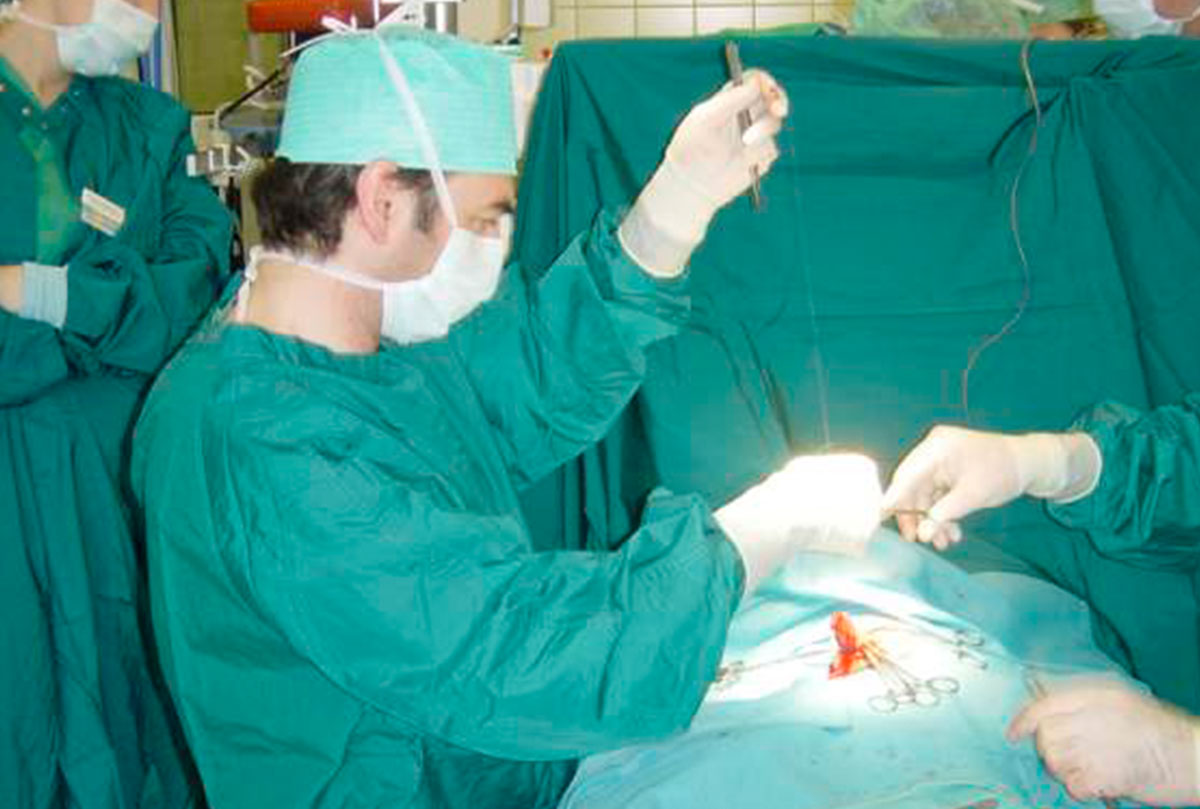
- I am a fully qualified General Practitioner (formerly “practical doctor”), General Surgeon, and Pediatric and Adolescent Surgeon. This comprehensive training means you can come to me with a wide range of problems — in most cases I can treat you directly, and when needed I work closely with other specialists to ensure you or your child receive the very best care.
- My main specialization is pediatric and adolescent surgery. If your child has any surgical issue — appendicitis, inguinal hernia, desire for circumcision, congenital anomalies, etc. — you are in exactly the right place.
- I have particular expertise in circumcision, inguinal hernia repair, appendicitis treatment, and minimally invasive (laparoscopic) techniques. I have authored an international textbook chapter on these topics. I have been performing laparoscopic appendectomies since the early 1990s, conducted scientific research in this field, and trained many of Vienna’s pediatric surgeons in these methods.
- Additionally, I have decades of experience and many thousands of procedures in pediatric inguinal hernia surgery and male circumcision.
- Even common but very bothersome problems such as ingrown toenails are treated here with special care and my own refined techniques for excellent, lasting results.
Persönliche Angaben:
Verheiratet, drei Kinder, zwei Enkelkinder
Dr. Kurosh Paya
My resume and my work
Mitgliedschaften, Ämter:
- Leiter der Arbeitsgruppe Kinderchirurgie in der AMIC 1998/1999
(Arbeitsgemeinschaft minimal invasive Chirurgie der Öst. Ges. f. Chirurgie) - Mitglied der Öst. Chirurgischen Gesellschaft
- Mitglied der Ges. der Chirurgen in Wien
- Allgemein beeideter und gerichtlich zertifizierter Sachverständiger am Landesgericht Wien
- Mitglied der Österreichischen Gesellschaft für Kinder- und Jugendchirurgie (ÖGKJCH)
- Mitglied der International Society for Digestive Surgery (ISDS)
- European Digestive Surgery (EDS)
- Medizinisch-Wissenschaftliche Gesellschaft für Kärnten und Osttirol
- Mitglied der Society of Laparoendoscopic Surgeons (SLS)
- Mitglied der International Pediatric Endoscopic Group (IPEG)
- Mitglied der International Society for the Study of Vascular Anomalies (ISSVA)
- Mitglied der European Hernia Society (EHS)
* Further information about our other services can be found on our main website for the Clinic Vienna.
- A doctor must above all bring experience and genuine empathy for both small and large patients. We never run out of ideas to distract even our youngest patients — freedom from fear and pain is our top priority.
- As a fully qualified General Practitioner, Prof. Paya offers the full spectrum of holistic medicine for children, adolescents, and adults. As a Consultant General Surgeon, he personally takes care of all surgical problems in adults.
- The practice is especially focused on the surgical diagnosis and treatment of children. Empathy, decades of experience, and continuous advanced training guarantee treatment at the highest level — in a relaxed atmosphere with state-of-the-art technology.

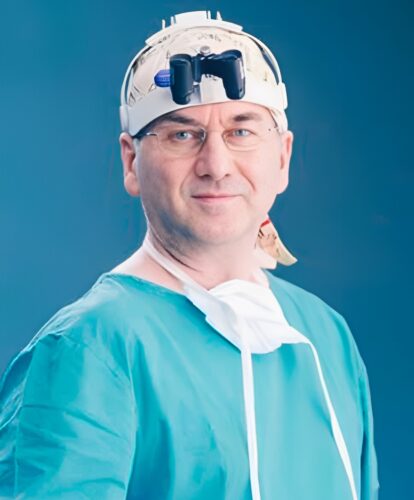
Ao.Univ.Prof.i.R.Univ.Doz.Dr. Kurosh Paya
Circumcision:
1Should I have my son circumcised?
There are religious and cultural reasons, hygienic reasons and medical (disease-related) reasons for circumcision. The glans (in medical parlance "glans") of the penis is covered by the foreskin, which releases the glans when the penis is erect.
The foreskin consists of two leaves, an inner and an outer leaf. Initially, the inner leaf is almost always glued to the glans, or grown together. Therefore pulling it back in the newborn age is hardly possible and better not to try. This foreskin can easily be injured, e.g. if it is pulled back too forcefully, and then scarring occurs. This, but even a congenital tightness, can make retraction of the foreskin painful or impossible. Even in infants, an excessively narrow opening of the foreskin can lead to backwater when urinating (so-called "ballooning"), infections and especially urinary tract infections can occur. Smegma, a fatty secretion from glands, which often shines through as yellowish-white globules under the foreskin in small children, collects under the foreskin when hygiene is poor. Up to the age of 3, the foreskin detaches itself from the glans in most of the boys so that at least the tip becomes free and up to the age of 10, most of the boys have no more problems with the complete retraction of the foreskin behind the glans.
There are few reliable statements about the physiological functions of the foreskin, a protection of the glans is postulated, as well as erogenous stimulation functions of the inner leaf, a circumcision, however, does not only not seem to be a disadvantage, but perhaps even an advantage. The acceptance of circumcision is given and readable by very large serious and scientifically arguing professional societies: The benefits of circumcision outweigh the harms, the American Academy of Pediatrics says in a policy statement in Pediatrics. The benefits include lower risk for urinary tract infections before 1 year of age, as well as reduced risk for sexually transmitted infections and penile cancer later in life. However, the AAP stops short of recommending routine circumcision. The decision is best left to parents, the group says.
The foreskin consists of two leaves, an inner and an outer leaf. Initially, the inner leaf is almost always glued to the glans, or grown together. Therefore pulling it back in the newborn age is hardly possible and better not to try. This foreskin can easily be injured, e.g. if it is pulled back too forcefully, and then scarring occurs. This, but even a congenital tightness, can make retraction of the foreskin painful or impossible. Even in infants, an excessively narrow opening of the foreskin can lead to backwater when urinating (so-called "ballooning"), infections and especially urinary tract infections can occur. Smegma, a fatty secretion from glands, which often shines through as yellowish-white globules under the foreskin in small children, collects under the foreskin when hygiene is poor. Up to the age of 3, the foreskin detaches itself from the glans in most of the boys so that at least the tip becomes free and up to the age of 10, most of the boys have no more problems with the complete retraction of the foreskin behind the glans.
There are few reliable statements about the physiological functions of the foreskin, a protection of the glans is postulated, as well as erogenous stimulation functions of the inner leaf, a circumcision, however, does not only not seem to be a disadvantage, but perhaps even an advantage. The acceptance of circumcision is given and readable by very large serious and scientifically arguing professional societies: The benefits of circumcision outweigh the harms, the American Academy of Pediatrics says in a policy statement in Pediatrics. The benefits include lower risk for urinary tract infections before 1 year of age, as well as reduced risk for sexually transmitted infections and penile cancer later in life. However, the AAP stops short of recommending routine circumcision. The decision is best left to parents, the group says.
2What happens during circumcision?
In surgical circumcision, which has been carried out in the same way for centuries, the foreskin, which consists of an outer and an inner leaf, is usually removed in such a way that a small seam of the inner foreskin leaf is fixed to the edge of the penis skin after cutting away the largest part of both foreskin leaves. Fixation can be achieved by surgical suture or by bonding under pressure. This not only results in a cosmetically clean and attractive but also functionally undisturbed adhesion of these two seams. The consequence of a circumcision is the partial or total exposure of the glans of the penis in the long run. Some (ritual) circumcisions in other countries are performed even without any fixation of the two edges, a procedure that is hardly found in civilized countries and is not recommended. Despite its simple principle, circumcision is not a beginner's operation and has considerable risk potential. It is technically complex and requires a lot of experience. As a rule, this operation is performed only once in a lifetime, cannot be reversed and therefore deserves our special care.
3Circumcision techniques:
There are countless techniques for circumcision. Each culture, each country, each time had developed its own special technique and the circumcisers trained with it were highly respected personalities who were honoured and courted.
Of all these over 300 techniques, very few have been transferred and preserved in modern times and modern medicine.
The following three techniques are known worldwide today:
Of all these over 300 techniques, very few have been transferred and preserved in modern times and modern medicine.
The following three techniques are known worldwide today:
41. The surgical circumcision
The gold standard, elaborate, because really carefully the foreskin leaves are removed one by one with a scalpel, the blood vessels are sclerosed, and the edges are then sewn together with many sutures. Very safe, aesthetically especially beautiful when performed by experienced surgeons, but also relatively complex, since it is possible only in an appropriately equipped facility or in a hospital by specialized pediatric surgeons, general surgeons and urologists. It is the only method in which the length of the rest of the inner and outer foreskin leaves can be adjusted as desired. This method can also be used to preserve the frenulum. Can be done under local anaesthesia (in the infant or older child) or, most comfortable for the child, in deep sleep (sedoanalgesia).
52. Gomco
The "clamp resection" using a GOMCO or Mogan clamp:
Most common circumcision technique in the West. In babies under local anesthesia, the foreskin is put under pressure between two metal rings so that the blood vessels are closed and the foreskin can be cut off sharply. Disadvantages here being a significantly increased risk of secondary bleeding and the inaccurate prediction of the residual length of the foreskin.
Thus, it may sometimes be necessary to carry out a follow-up resection. The risk of wound dehiscence, i.e. the spreading of the wound edges with less attractive results in the long term, is also higher than with surgical resection. It can be performed anywhere, even at home, but, just like surgical techniques, it requires high standards of hygiene, as otherwise dangerous diseases (HIV, etc.) could be transmitted. Significantly cheaper in cost comparison.
Most common circumcision technique in the West. In babies under local anesthesia, the foreskin is put under pressure between two metal rings so that the blood vessels are closed and the foreskin can be cut off sharply. Disadvantages here being a significantly increased risk of secondary bleeding and the inaccurate prediction of the residual length of the foreskin.
Thus, it may sometimes be necessary to carry out a follow-up resection. The risk of wound dehiscence, i.e. the spreading of the wound edges with less attractive results in the long term, is also higher than with surgical resection. It can be performed anywhere, even at home, but, just like surgical techniques, it requires high standards of hygiene, as otherwise dangerous diseases (HIV, etc.) could be transmitted. Significantly cheaper in cost comparison.
63. Plastic ring method
Plastic ring method (e.g. Plastibell® ring):
Immediately after birth, a special clamping ring is fitted, which falls off by itself with the foreskin after a few days.
Frequently used in the USA, recently less and less frequently because of the higher complication rates and sometimes less pleasant results. Cheaper in terms of expenses than terminal resection. The main advantage here being the fast procedure under local anesthesia, the postoperative course, which is unproblematic in most cases, and a usually quite acceptable final image at low cost.
The main disadvantages are that after the ring has fallen off, the remaining edge must often be carefully folded back daily for several weeks in order to prevent scarring from causing the glans to "overgrow" again. There is also the risk that the ring does not always come off completely and then has to be partially cut off or that wound dehiscence occurs or that there is a very long preliminary test or that too much of the penis skin is resected. Also, the post-bleeding rate is higher compared to surgical circumcision.
Immediately after birth, a special clamping ring is fitted, which falls off by itself with the foreskin after a few days.
Frequently used in the USA, recently less and less frequently because of the higher complication rates and sometimes less pleasant results. Cheaper in terms of expenses than terminal resection. The main advantage here being the fast procedure under local anesthesia, the postoperative course, which is unproblematic in most cases, and a usually quite acceptable final image at low cost.
The main disadvantages are that after the ring has fallen off, the remaining edge must often be carefully folded back daily for several weeks in order to prevent scarring from causing the glans to "overgrow" again. There is also the risk that the ring does not always come off completely and then has to be partially cut off or that wound dehiscence occurs or that there is a very long preliminary test or that too much of the penis skin is resected. Also, the post-bleeding rate is higher compared to surgical circumcision.
Brigittaplatz 23, 1200 Wien Telefon: 01 / 9928805 office@beschneidungsklinik.at
Opening hours:
(The time of appointment is agreed only
by phone or e-mail)
| Friday | 16:00 - 19:00 |
|---|---|
| Saturday | 10:00 - 14:00 |
| Sunday | 10:00 - 14:00 |